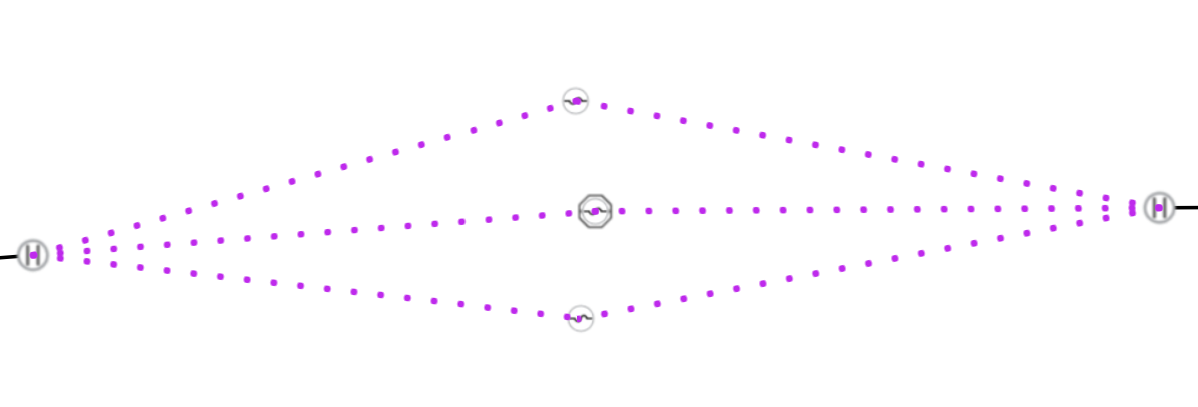
What are associations?
The utility network associations model connectivity, containment, and structural attachment
relations between assets. Associations do not have a spatial presence, so the
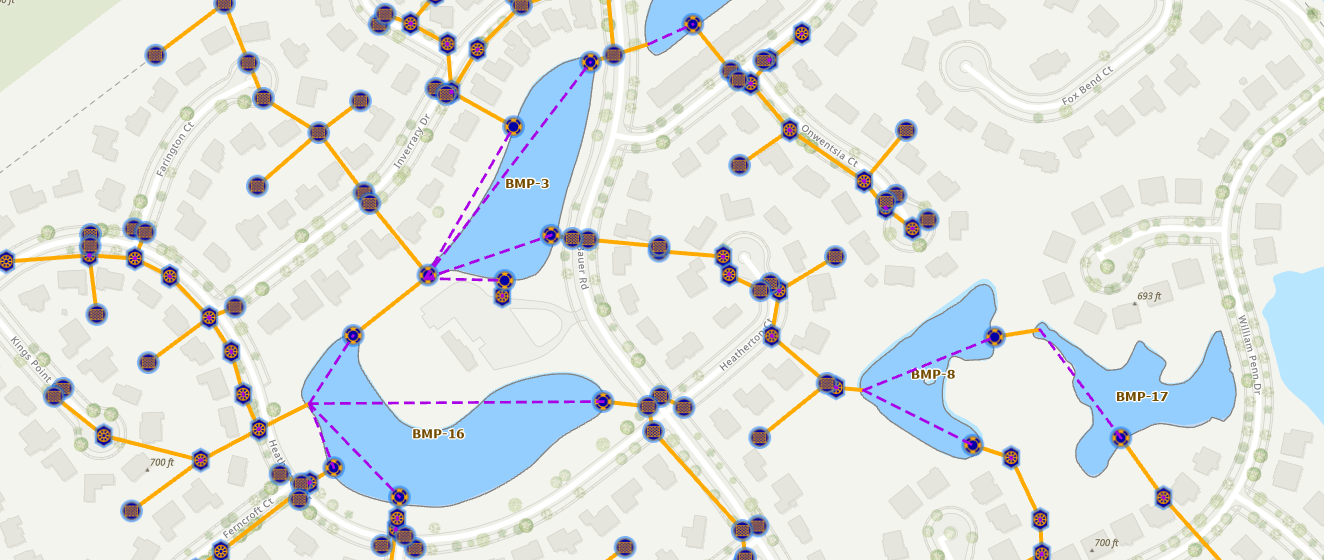
Define the query parameters
Use the SynthesizeAssociationGeometriesParameters class to define the parameters for querying associations. First, make sure to load the utility network from a WebMap, as demonstrated in Introduction to utility networks. In the following code snippet, the parameters are set to return the structural attachment and connectivity associations. The example returns a maximum of 500 associations within the current view extent.
const viewElement = document.querySelector("arcgis-map");viewElement.addEventListener("arcgisViewReadyChange", () => {  // Check if webMap contains utility networks  if (webMap.utilityNetworks.length > 0) {    // Assigns the utility network at index 0 to utilityNetwork    utilityNetwork = webMap.utilityNetworks.getItemAt(0);
    // Triggers the loading of the UtilityNetwork instance    await utilityNetwork.load();
    // Define parameters needed to query associations    const associationParameters = new SynthesizeAssociationGeometriesParameters({      extent: view.extent,      returnAttachmentAssociations: true,      returnConnectivityAssociations: true,      returnContainerAssociations: false,      outSR: utilityNetwork.spatialReference,      maxGeometryCount: 500,    });  }});
Obtain the associations
Next, the defined query parameters must be passed into the synthesizeAssociationGeometries() method. This method will return the associations within a specified extent.
// Obtain the associations returnedconst viewAssociationsResult = await synthesizeAssociationGeometries.synthesizeAssociationGeometries( utilityNetwork.networkServiceUrl, associationParameters, );Add the results as graphics
Then, render the associations returned from synthesizeAssociationGeometries() as graphics. Each association is converted to a graphic using the returned geometries. In the following example, the associationType determines the color of the line symbology for the association graphics.